This project was based around escaping to a chosen system and the system I chose was cannibalism. My fascination for this topic came from finding out that cannibalism is not only legal in the UK but also in a number of other countries around the world. I wanted to research the various ways that someone can live out their cannibalistic tendencies. I researched different types of cannibalism such as auto cannibalism and pseudo cannibalism, at the same time delving into the strange world of cannibalism and understanding the laws used to police it. I wanted to give myself the best chance of becoming a legal cannibal, studying people who had managed this and those who had fallen short and been arrested. To illustrate my findings, I made two iterations of a publication, one more focussed on imagery and the second (see video on the right) concentrating on the facts and information I had gathered about being a legal cannibal in the world.
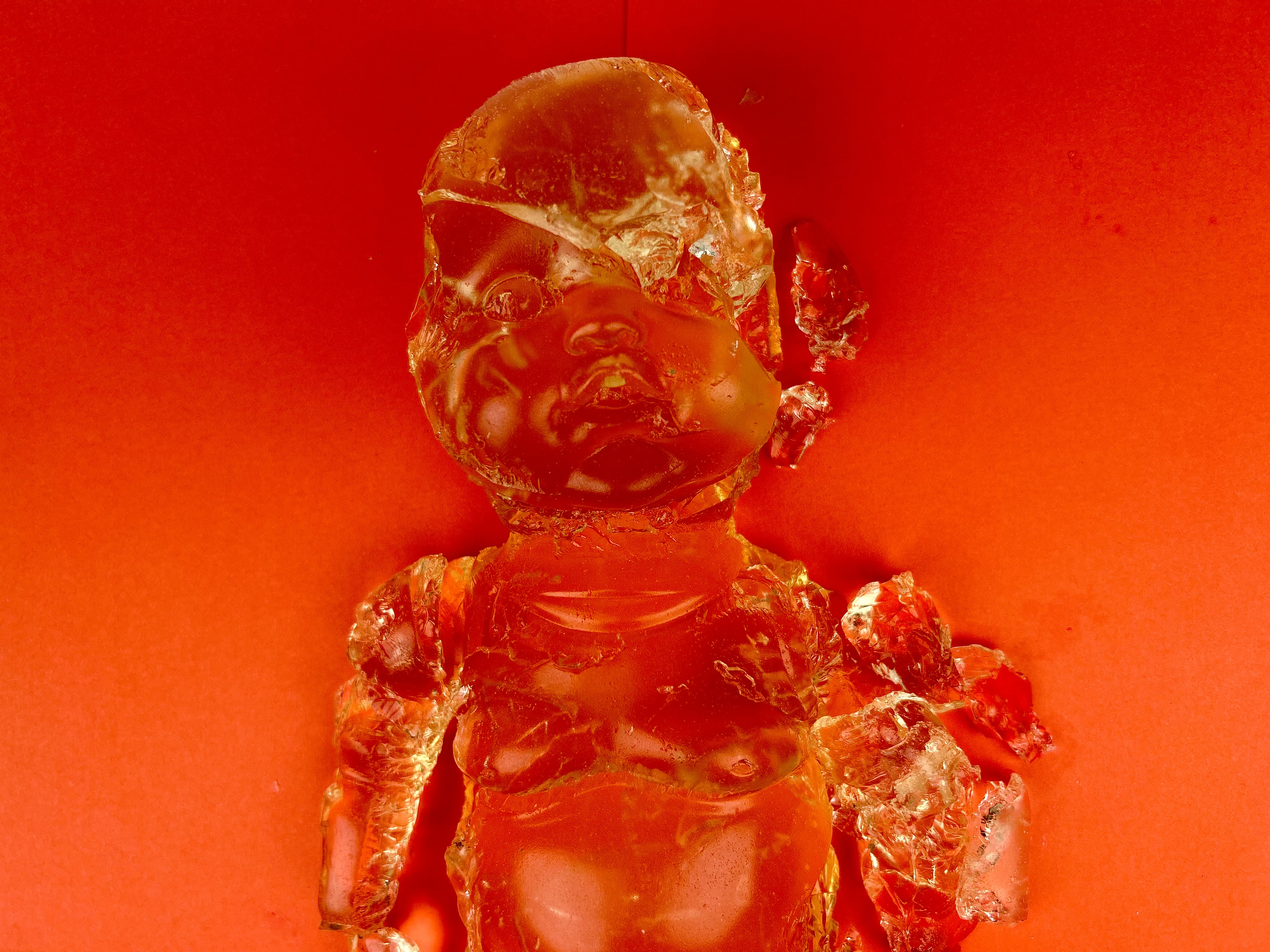
The photos of the jellied babies refer to the part of the project where I looked into the efficiency of eating human meat or more specifically human gelatine. In my project, I used a lot of jelly babies to portray human and pseudo cannibalism which led me to ask myself, ‘What if they were made from human gelatine?’ To do this, I figured out how gelatine is made from cows. The average cow weighs 600kg and produces 73kg of manufactured gelatine which accounts for 12.17% of the cow’s total mass. However, the average newborn baby weighs 3.4kg and could produce 1.02kg of manufactured gelatine which is 30% of the baby’s total mass meaning that, in terms of gelatine produced per kilo of flesh, a baby is far more efficient. From my calculations, I concluded that a human baby could produce 769 jelly babies. The baby on the screen is one I made from exactly 769 jelly babies as a representation of my findings. There is an accompanying pamphlet detailing how to make your very own jellied baby.