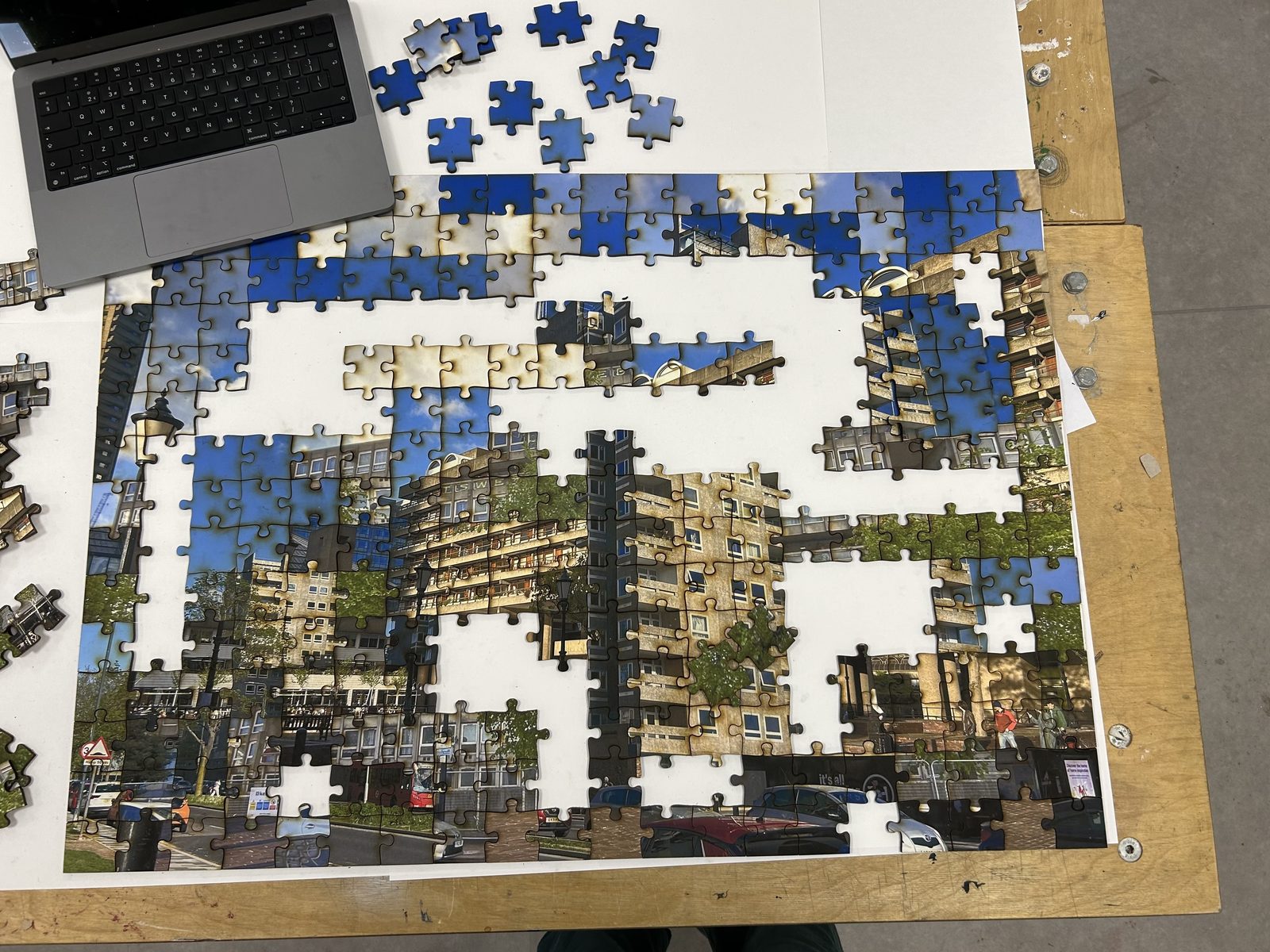
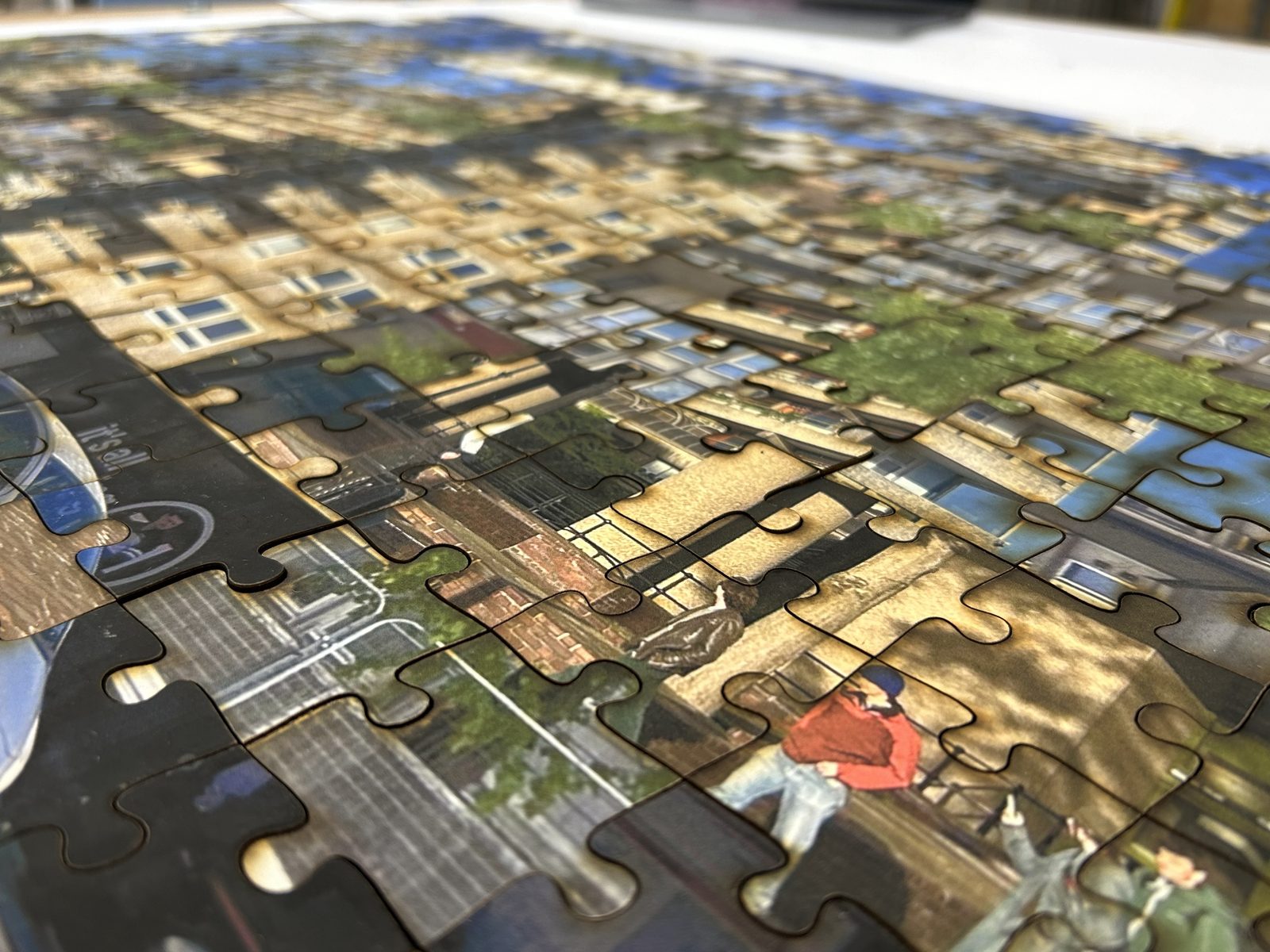
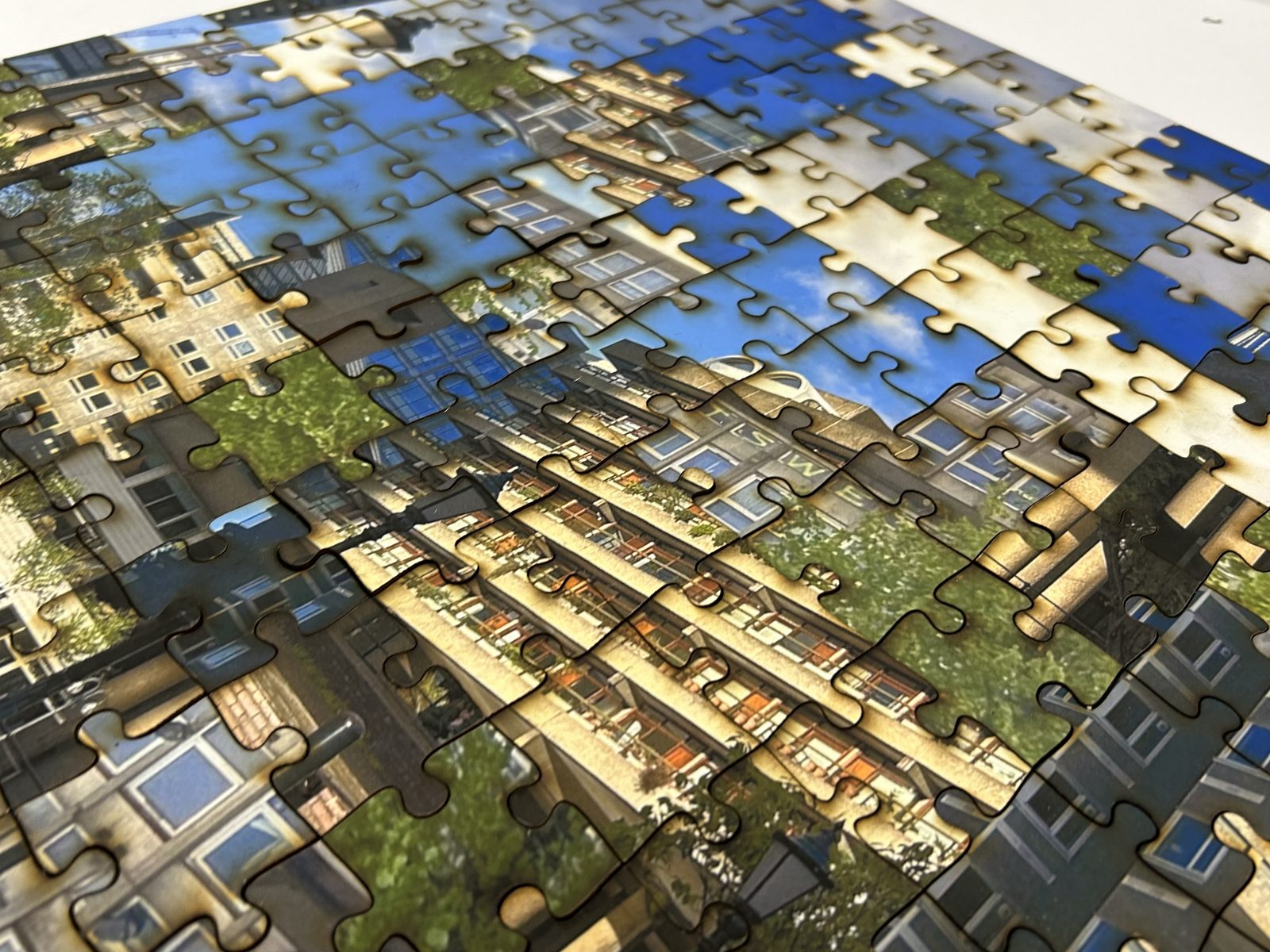
This project originated from my passion for the aesthetic of Brutalism. Through my work, I strove to gain a deeper understanding of the discrepancies between the aesthetic and the philosophy of Brutalism, my main question being, ‘Why didn’t Brutalism work?’ The outcome of the project was a series of jigsaws which represent images of both the successes and failures of Brutalist architecture. The jigsaws were designed as a learning activity as there is no correct way to complete them. Each jigsaw can be intertwined with the other jigsaws, illustrating the fact that there is no correct way for Brutalist buildings to be built whilst highlighting the common utopian ideal for the future and how living should be redesigned that was part of the Brutalist philosophy.
My research led me to develop my own beliefs as to why Brutalism failed. In my opinion there were multiple reasons for the failure but most of the problems stemmed from a place of social class. Success stories such as the Barbican were middle-class settlements which had higher rents and therefore more money for maintenance and development. Failures such as Robin Hood Gardens were built to house many working-class people after the Second World War, lower rents meant less money to go towards the upkeep of the building. In addition, many architects treated these projects as their babies, their first and last dabble into Brutalist architecture, meaning the emphasis was more about their own ideologies than the potential residents.
The jigsaw should be done as a group, a way for communities to come together and express how they feel about Brutalism as a philosophy and how this might have impacted their lives and way of living. The jigsaw has one simple rule – that it should never be completed to resemble one of the images of the actual brutalist buildings on the box.